
Bexar County Criminal Docket Searches
For a Bexar County criminal court docket, the public route runs through the official Bexar Justice Information Portal. Pick Smart Search when you know the case or a party. The best key is a case number. With only a name, enter it in Last, First Middle form, then use Advanced Filtering Options to trim a crowded result by location, case type, status, filing dates, judicial officer, party role, or cross-reference data.
Access is free, and no public account is needed. Treat the results as supplemental, though. The Bexar County District Clerk warns that online case data is limited, and the clerk-held file stays official. Work in this order:
- Decide whether the matter is a felony, county misdemeanor, municipal citation, or JP case.
- Open Smart Search and begin with the case number or a narrowly written name.
- Use court level, status, date, and case-type filters if the result list is broad.
- Open the matching number and read Hearings and Events from the newest entry back.
- Call or visit the responsible Bexar County clerk for a certified or missing record.
Bexar Felonies and Misdemeanors Split
Two offices hold most Bexar County criminal records. The Bexar County District Clerk keeps the felony District Court files. Criminal Filing sits in the Paul Elizondo Tower at 101 W Nueva with the number 210-335-2591. Misdemeanors at the county level, along with bond forfeitures, belong to the Bexar County Clerk. Its Criminal Central Filing line is 210-335-2238. It serves records through county offices around the courthouse and Justice Center.
That split trips up plenty of name searches. A misdemeanor docket will not sit beside a felony file, even for the same person. Class C and city ordinance cases are a step further away. A municipal or justice-court clerk holds those. Know the charge level and numbered court before assuming a blank screen means no case exists.
Routing rule: felony means District Clerk; county misdemeanor means County Clerk; city or fine-only Class C cases usually mean the issuing municipal or JP court.
Criminal Dockets: What They Show
Think of a Bexar County criminal docket as a dated log of events. Odyssey labels the chronology “Hearings and Events.” Newest entries load first. Hitting Show More or Show All is often the only way to reach the filing and the early settings. Take each label at face value. A filed charge is an allegation. A future setting is not a finished hearing. No dismissal or judgment counts as an outcome until the court’s own entry says so.
| Case number and court | The local identifier, assigned District Court or County Court at Law, and case type. |
|---|---|
| Parties and roles | Defendant, attorneys, judicial officer, and other public participants. |
| Charge or count | Offense label and level as filed, not a statement that the allegation was proved. |
| Hearings and Events | Arraignment, motion, pretrial, trial, reset, plea, and sentencing entries. |
| Status and disposition | The latest recorded status, judgment, dismissal, sentence, or other court action. |
| Documents and costs | Links or indicators where public; some material remains clerk-only or restricted. |
The list can name a document yet keep its image private. When exact text, certification, or a full record matters, ask the correct Bexar County clerk for the filing itself.
Bexar Odyssey Search Limits
Smart Search caps results at 200. The default grid shows case number, defendant, type, party name, and party type, and you can select up to six columns. Common surnames reach that ceiling fast. Narrow filing dates, status, location, or judicial officer before turning to a wildcard. Per the official user guide, a wildcard needs at least one first-name character, three last-name characters, or four case-number characters.
The portal also leans on JavaScript, cookies, and a short active session. A timeout, a stale bookmark, or a redirected criminal-search page can all masquerade as a missing record. Retry at the current Odyssey address. Still stuck? Contact Criminal Filing or visit a public counter. Bexar County notes that the present Justice Information Portal replaced older criminal, fugitive, and bail-bond public searches, so a dead link should never settle the question.
Criminal Case Stages on the Docket
A Bexar County criminal case may open with a complaint, magistration, or filing. The later trial-court number unlocks the full docket. Felony entries can show indictment and assignment ahead of arraignment. From there, felony and misdemeanor dockets alike may list pretrial settings, motions, pleas, trial activity, disposition, and sentencing. A reset only moves a date. The case stays alive.
Docket flow: Filing › Arraignment › Pretrial › Plea or Trial › Disposition › Sentencing
Not every case walks through those steps in order. A dismissal can cut things short, and specialty assignments sometimes add review settings. Read the newest Bexar County entry against the earlier event it changes. For the full lookup mechanics, see the Bexar County docket search.
Bexar Central Magistrate Is Limited
The Bexar Central Magistrate search offers a rolling 24-hour view. It covers Class B and higher arrests. It helps at the very first stage, before indictment or assignment moves a case forward. But it is not the complete Bexar County criminal court docket. It cannot settle the final charge, the later case number, a judgment, or a disposition.
The official page is candid about that limited scope. Its current interface spells out exactly what the 24-hour tool does and does not cover.
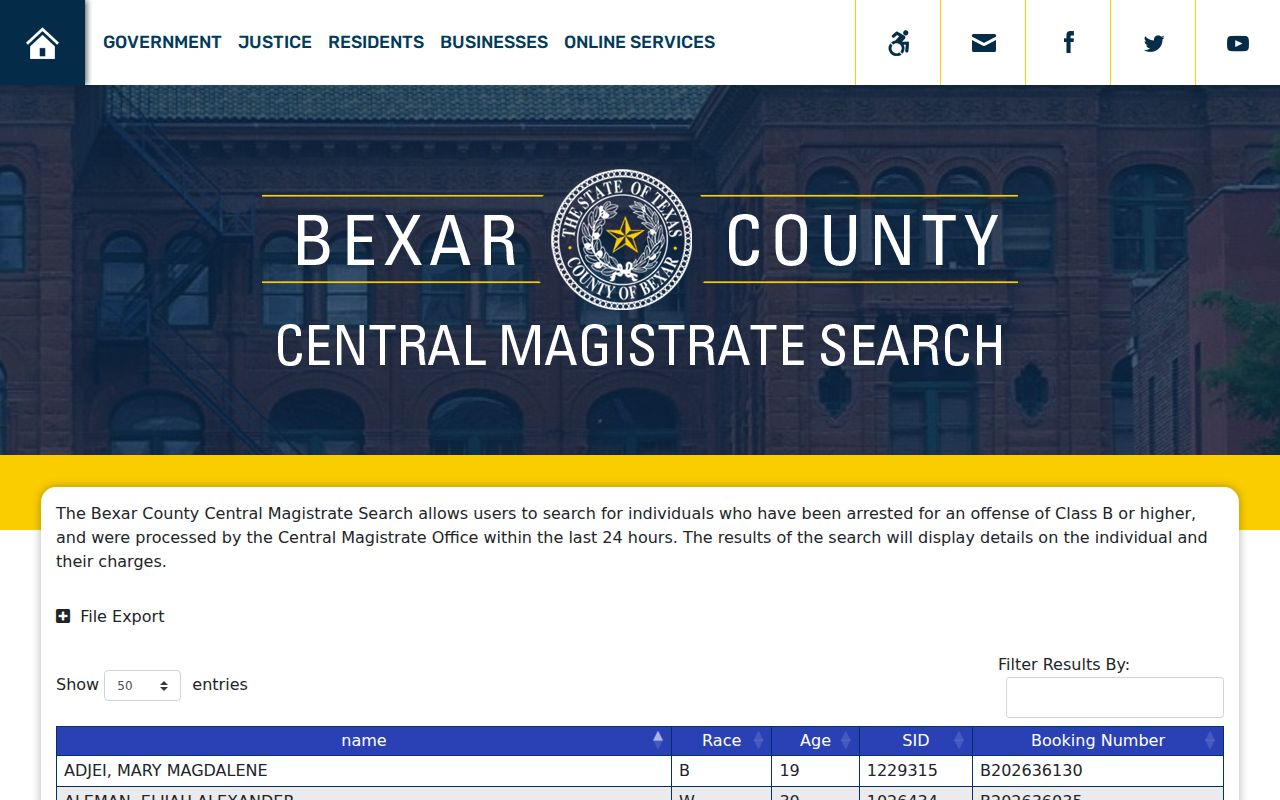
Treat the 24-hour search as a lead. Carry any public identifier into Odyssey, then verify the later felony or misdemeanor file with the Bexar County clerk that owns it.
Bexar County Criminal Docket Courts
Bexar County splits its criminal work across two levels. Ten criminal District Courts handle felonies. Below them sit fifteen County Courts at Law, each numbered, with criminal, civil, and specialty dockets assigned by court. That number matters. That leaves you guessing at the calendar. So write down the court number, the case type, and the clerk before you call anyone.
The county also runs a long list of specialty calendars. DWI Court, Veterans Treatment Court, Mental Health Court, Camino Court, Reflejo Court, Community Court, Felony Drug Court, and Felony Veterans Treatment Court are among them. None of these programs keeps its own public case index. They are assignments inside the Bexar County court system. A public Odyssey docket may name the court or a setting while keeping treatment details off screen. Mental-health and juvenile material stays confidential.
The Bexar County Courts directory lists every numbered court, its judges, and the contacts for each specialty docket.
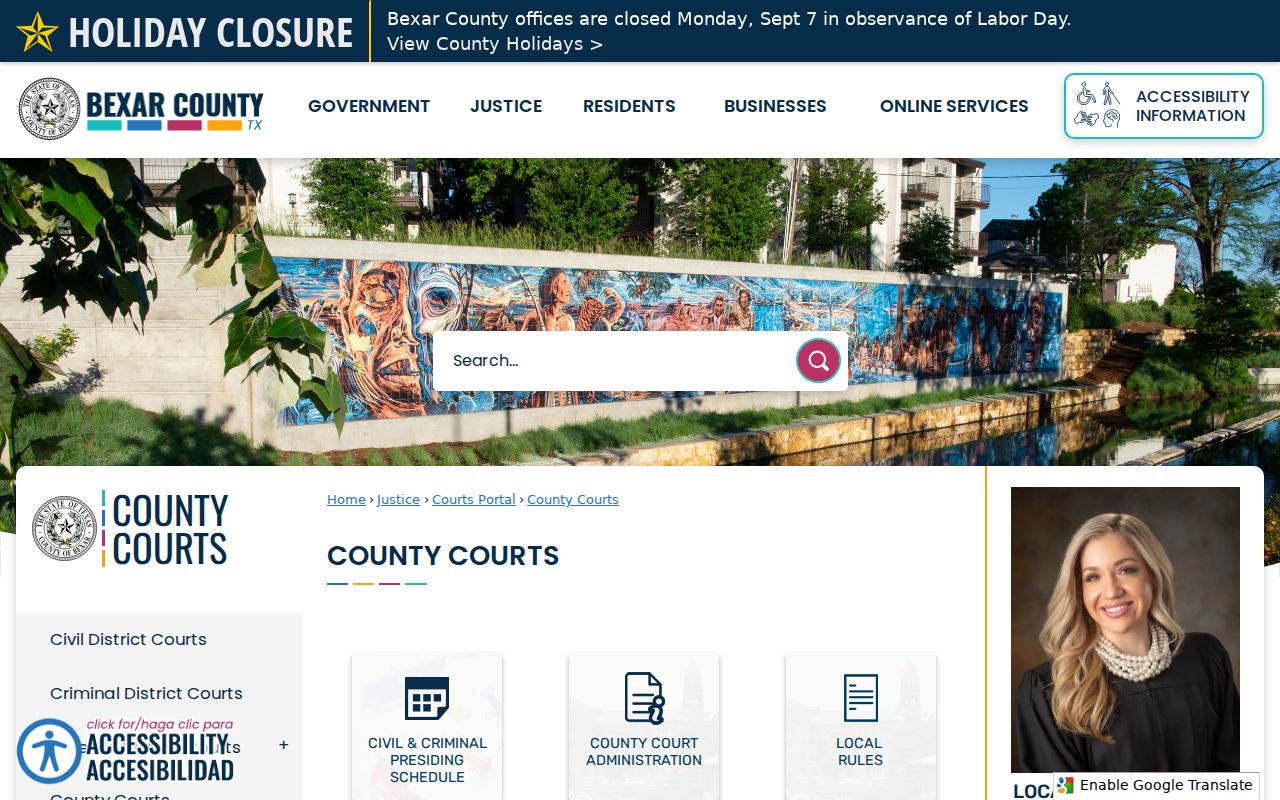
Odyssey gives the number; the directory gives the phone. Verify both before you call about a setting.
Bexar Criminal Event Terms
Short labels, very different legal effects. Read each one with its date and the entries that come after it, because that plain habit keeps a Bexar County criminal docket search from turning into an unsupported story.
- Setting
- A scheduled court event. It does not show that the event occurred.
- Reset or continued
- The setting moved; the newest entry should state or lead to the next date.
- Plea
- The defendant’s formal response as entered by the court.
- Disposition
- The recorded way a charge or case ended, such as dismissal or judgment.
- Bond forfeiture
- A separate bond-related proceeding that may be held by the County Clerk.
Label still unclear? Ask the clerk for the event text or the order, and never infer guilt from charge wording, an arrest lead, or a pretrial setting.
Access Rules for Criminal Dockets
Most Bexar County criminal docket entries are public. Texas law and court rules still shield sensitive data and whole case categories. The Bexar portal leaves out secured types like adoption, child protection, juvenile or CINS matters, judicial bypass, mental health, and minor-account proceedings. Sealed items and identifiers can hide inside a public case.
Texas splits court files from county paperwork. Judicial records may follow Texas court records policy and Rule 12 procedures. The Texas Public Information Act governs many government records outside the judicial case file. Juvenile records get extra protection under Texas Family Code Chapter 58.
Public does not mean unrestricted. Use the responsible court or clerk for sealed-file questions, and do not republish a Social Security number, birth date, driver-license number, protected victim detail, or child’s identity.
Name the case and the document. The County Clerk's recent material lists plain and certified criminal-copy charges, and fee sources differ by date and transaction. Confirm the current amount before paying.
Bexar Specialty Criminal Dockets
Specialty assignments add review, treatment, or compliance settings. Bexar County lists DWI Court, Veterans Treatment Court, Mental Health Court, and felony treatment assignments as examples, layered onto a court docket that already exists. The numbered court still controls the file and the clerk route.
Program placement is not a final disposition. Eligibility and treatment details may not be public. Take the court and event label from the Bexar County criminal docket, and use program contacts only for authorized procedural questions. A specialty calendar is not a county-wide database.